
Fill the walls, keep the plaster
Wall Insulation for Older Homes in Grand Rapids, MI
Insulating empty walls in pre-war houses through small holes, inside or out.
- Free on-site estimates across Grand Rapids and Kent County
- Every area itemized with foam type, thickness and R-value
- Leaks, damp framing and old wiring pointed out before we insulate
Hollow Walls in a Century-Old City
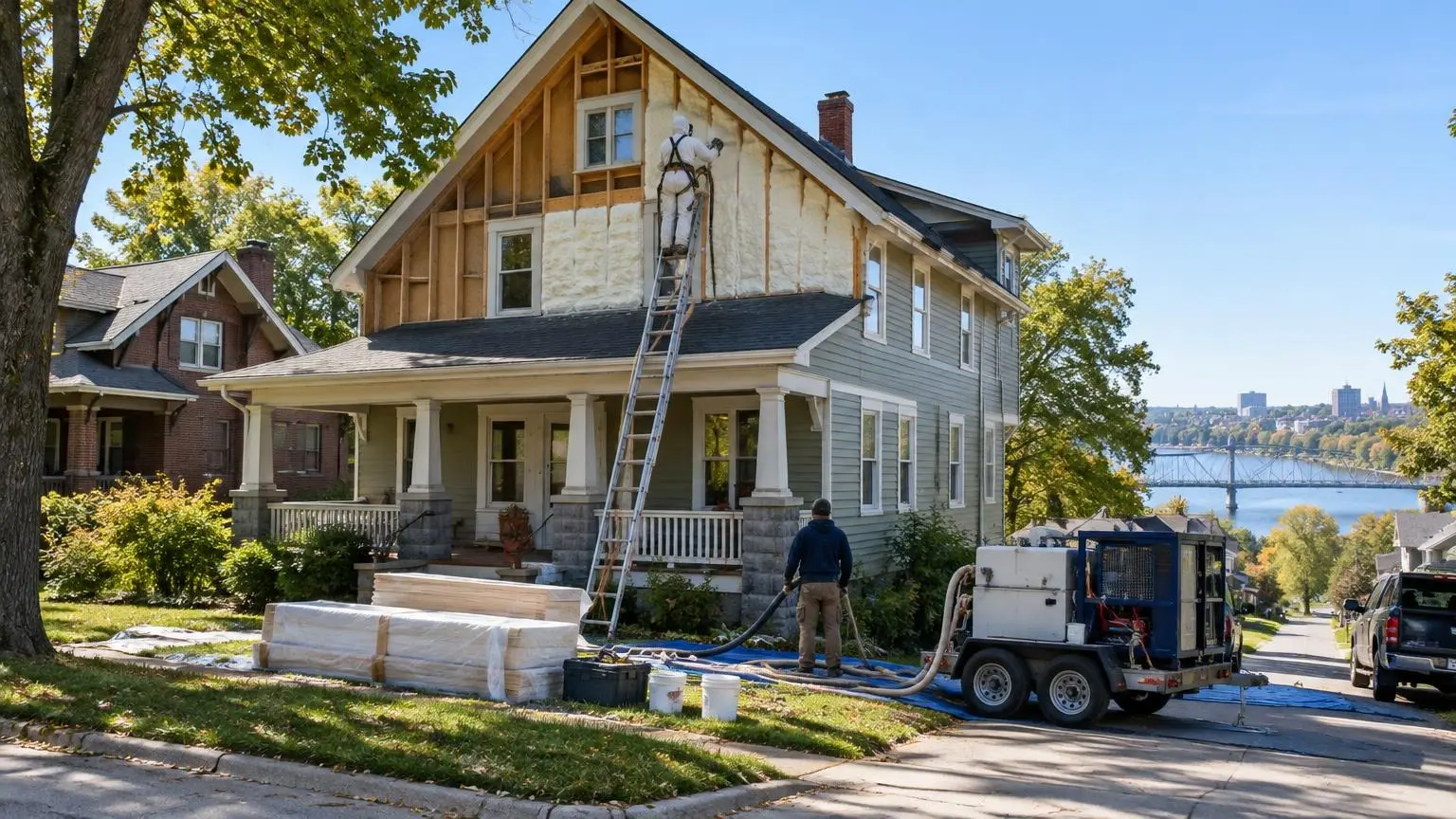
Wall Insulation for Older Homes is for houses built before insulation was standard, and Grand Rapids has a lot of them: 37.5% of the city's homes fall in the built-1939-or-earlier group (ACS 2019 to 2023 via Point2). In many of those walls there is nothing but air between the plaster and the siding. A room with three exterior walls and no insulation stays cold no matter how hard the furnace runs.
How we fill closed walls
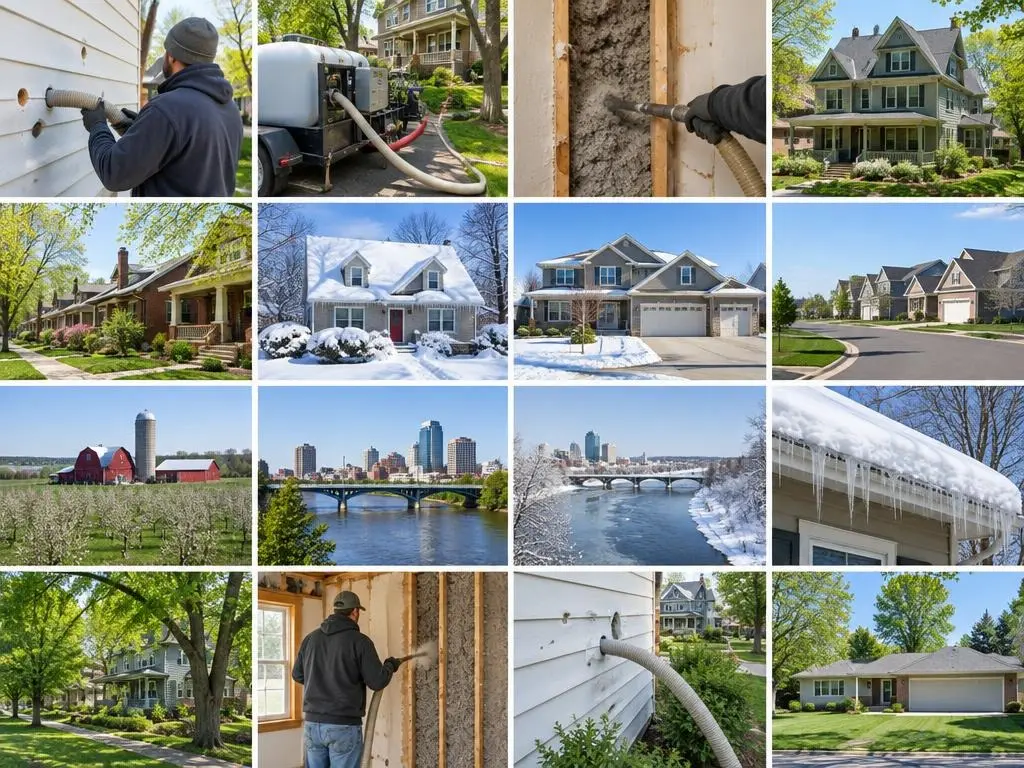
We drill a small hole into each wall cavity, either from outside under a strip of siding or from inside through the plaster, and fill it. Dense-packed cellulose is blown at high density so it fills the cavity and slows air movement. Injection foam is pumped in as a liquid and expands to fill the space. Holes are plugged afterward; on the outside, siding usually goes back over them.
Balloon framing
Many older Grand Rapids houses are balloon framed, with studs that run from the sill to the roof and no fire blocking between floors. Air moves up those cavities like a chimney. Before filling walls, we seal the tops of the cavities from the attic and the bottoms from the basement, which cuts drafts and helps the fill stay put.
Historic districts
Grand Rapids has six local historic districts, and Heritage Hill has about 1,300 homes dating from as early as 1848. The city's Historic Preservation Commission reviews exterior renovation in those districts. Working from the inside through the plaster avoids touching the exterior, and we can talk through both options with you before you decide.
Things to check first
Knob-and-tube wiring, common in early 20th-century houses, should not be buried in insulation without an electrician's say-so. We look for it in the attic and basement and at outlets. Walls with signs of moisture, such as peeling paint or rot at the sills, need that fixed first.
Newer homes and open walls
If you are remodeling and the walls are open, spray foam or batts can go straight into the studs. For an addition, the 2021 IECC lists R-20 or R-13 plus R-5 continuous for Zone 5 walls. DTE lists a $125 rebate for at least 250 square feet of above-grade wall insulation in homes it heats.
Plaster and lath
Plaster on wood lath is common in pre-war houses. Drilling it needs care so the keys holding the plaster do not break loose, and we patch holes so they are ready for paint.
Call (616) 219-1886 or book a visit and we will check your walls and tell you what they can take. Get a free estimate
What This Covers
Wall work for older and remodeled houses.
Dense-pack cellulose
Blown at high density into closed cavities.
Injection foam
Liquid foam pumped into closed walls.
Balloon-frame sealing
Blocking the open tops and bottoms of wall cavities.
Open-wall spray foam
Foam into exposed studs during a remodel.
Wall Insulation Cost Ranges
| Job | Range and source |
|---|---|
| Blown-in, exterior walls | $1,900 to $7,800, $1.10 to $3.70 per sq ft (HomeGuide); $2,000 to $4,000 (Fixr) |
| Dense-pack cellulose | $1.60 to $4.20 per sq ft (HomeGuide) |
| Spray foam, existing walls | $3.15 to $7.50 per sq ft (Fixr) |
| Spray foam, new construction | $2.75 to $6.50 per sq ft (Fixr) |
| Spray foam, all exterior walls | $4,000 to $10,000 (HomeGuide) |
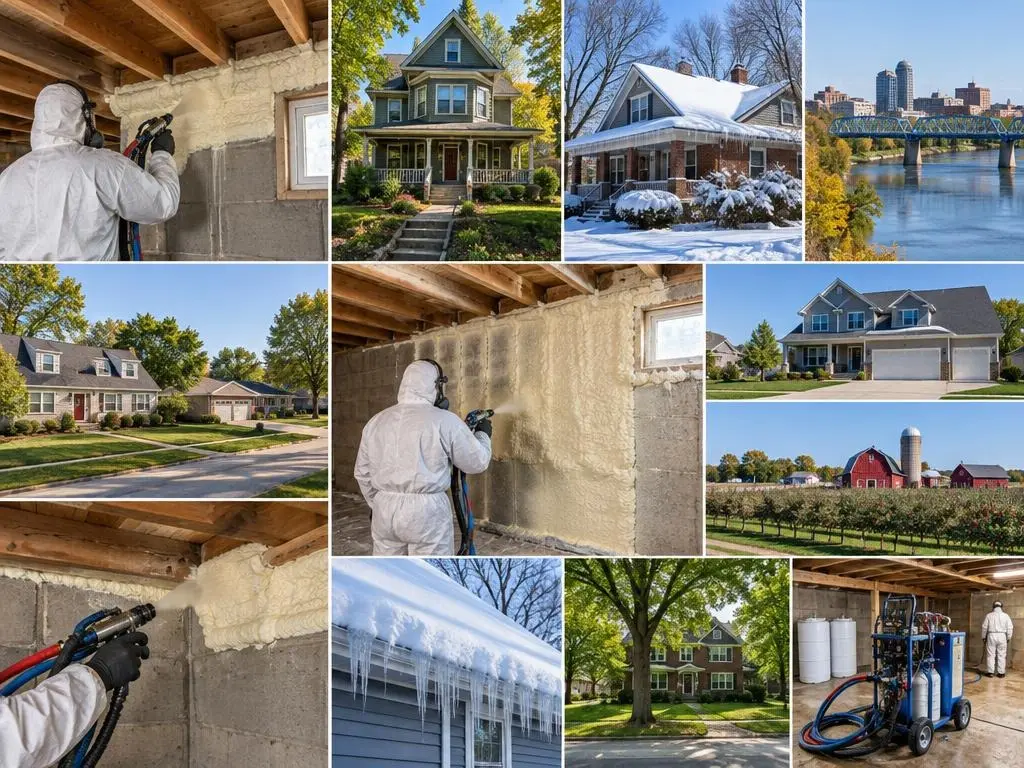
HomeGuide (2025-2026) and Fixr (2025) publish these national ranges. Wall height, siding type, number of cavities, blocking and access move the total. We count cavities on site and give you a written estimate, and that is what you pay.
How It Works
1. Check the walls
We look for wiring, moisture and blocking, and pick inside or outside access.
2. Seal the cavity ends
Balloon-frame tops and bottoms are sealed from the attic and basement.
3. Drill and fill
Each cavity is filled to density through a small hole.
4. Plug and patch
Holes are plugged and siding replaced or plaster patched for paint.
Wall Insulation for Older Homes Questions
Can you spray foam inside existing walls?
Not with standard spray foam, which needs open framing. Closed walls are filled with injection foam or dense-pack cellulose through small holes.
Will insulating walls cause moisture problems?
In a sound wall, a properly filled cavity is fine. Walls with leaks or no siding protection need repair first, which we check.
Do you have to remove siding?
Often a strip is lifted and replaced. Working from inside through plaster avoids the siding entirely.
How long does it take?
A typical older house takes one to three days, depending on the number of walls and access.
Wall Insulation for Older Homes Service Areas
- Spray Foam Insulation in Grand Rapids, MI
- Spray Foam Insulation in Wyoming, MI
- Spray Foam Insulation in Kentwood, MI
- Spray Foam Insulation in Walker, MI
- Spray Foam Insulation in Grandville, MI
- Spray Foam Insulation in East Grand Rapids, MI
- Spray Foam Insulation in Grand Rapids Township, MI
- Spray Foam Insulation in Ada Township, MI
- Spray Foam Insulation in Cascade Township, MI
- Spray Foam Insulation in Plainfield Township, MI
- Spray Foam Insulation in Alpine Township, MI
- Spray Foam Insulation in Rockford, MI
- Spray Foam Insulation in Cedar Springs, MI
- Spray Foam Insulation in Sparta, MI
- Spray Foam Insulation in Lowell, MI
- Spray Foam Insulation in Byron Center, MI
- Spray Foam Insulation in Gaines Township, MI
- Spray Foam Insulation in Caledonia, MI
Get a Wall Insulation for Older Homes Estimate
Free wall insulation checks for older Grand Rapids homes.